 0804547800108045478001
2D & 3D Digital Mammography


2D & 3D Digital Mammography Specification
- Product Type
- Digital Mammography
- Color
- Multicolor
- Function
- Hospital Use
- Portable
- Yes
- Condition
- New
- Use
- Medical Use
- Material
- Plastic
- Suitable For
- For Patients Use
- Technology
- Modern
2D & 3D Digital Mammography Trade Information
- Minimum Order Quantity
- 1 Unit
- Payment Terms
- Telegraphic Transfer (T/T), Cash in Advance (CID), Cheque, Cash Advance (CA)
- Supply Ability
- 1 Unit Per Week
- Delivery Time
- 1 - 6 Week
- Main Export Market(s)
- Australia, North America, South America, Eastern Europe, Western Europe, Middle East, Africa, Central America, Asia
- Main Domestic Market
- All India
About 2D & 3D Digital Mammography
Digital mammography paves way for solid-state detectors to replace the typical X-Ray films. This system converts x-rays into electronic signals for better imaging. The converted signals produce images of the breast that can be monitored on a computer screen and printed on a special film paper for further diagnosis. Digital Mammography is available in two different types - New 3D digital breast mammography/tomosynthesis and Standard 2D digital breast mammography.Advanced Digital Imaging Technology
Our mammography equipment utilizes both 2D and 3D digital imaging with multicolor options. This innovative approach allows for detailed and precise diagnostic imaging, ensuring that healthcare professionals can detect and assess abnormalities with greater accuracy. Modern technology empowers both clinicians and patients with reliable, efficient breast health solutions.
Designed for Clinical Flexibility
Built with portability in mind, this mammography system can be easily transported between departments or facilities. Its lightweight plastic construction does not compromise durability, making it suitable for various hospital settings. Whether used in busy urban hospitals or smaller clinics, the device provides dependable performance and ease of use.
FAQs of 2D & 3D Digital Mammography:
Q: How does 2D & 3D digital mammography enhance medical imaging accuracy?
A: 2D & 3D digital mammography provides highly detailed images of breast tissue. The 2D mode offers traditional screening views, while the 3D function creates layered images from multiple angles, leading to improved detection and reduced chances of false positives and negatives.Q: What advantages does the portable design offer for hospitals and patients?
A: The portable design ensures that mammography services can be delivered flexibly within different hospital areas or even between locations. This makes screening more accessible for patients and enhances workflow efficiency for healthcare providers.Q: When is it recommended to use 3D mammography instead of 2D?
A: 3D mammography is generally advised for patients with dense breast tissue or those requiring additional diagnostic clarity after a 2D mammogram. It helps in visualizing overlapping tissue structures more accurately, aiding early detection.Q: Where can this mammography system be installed within a hospital environment?
A: The mammography units compact and portable form allows it to be set up in radiology departments, dedicated screening rooms, or even mobile medical units, depending on the hospitals needs and available space.Q: What is the process for operating this modern mammography technology?
A: A trained technician positions the patient and selects the appropriate imaging mode. The device captures high-resolution 2D or 3D images, which are then reviewed by radiologists for diagnostics and further management.Q: Who benefits most from multicolor digital mammography?
A: Patients and healthcare professionals both benefitpatients receive more precise and comfortable screenings, while professionals gain enhanced visualization of breast tissue, aiding in more accurate diagnosis and treatment planning.- Minimum Order Quantity
- 1 Unit
- Supply Ability
- 1 Unit Per Week
- Delivery Time
- 1 - 6 Week
- Main Domestic Market
- All India
- Main Export Market(s)
- Australia, North America, South America, Eastern Europe, Western Europe, Middle East, Africa, Central America, Asia
 Get Latest Price
Tell us about your requirement

Price:
Quantity
Select Unit
- 50
- 100
- 200
- 250
- 500
- 1000+
Additional detail
Mobile number
Email

More Products in Mammography Category

Mammography High Frequency (Kiran)
Price Range 20000.00 - 100000.00 INR / Piece
Minimum Order Quantity : 1 Unit
Condition : New
Use : Medical Use
Material : Plastic
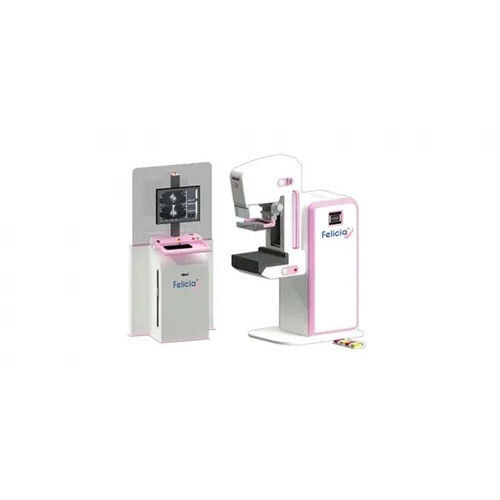
Kiran Felicia Digital Mammography
Price 7000000 INR / Unit
Minimum Order Quantity : 1 Unit
Condition : New
Use : Medical Use
Material : Plastic and metal

Contact Details

- A2,A3, Sipcot Industrial Area, Irungattukottai, Chennai - 602117, Tamil Nadu, India
- Phone : 08045478001
TRIVITRON HEALTHCARE PVT. LTD.
GST : 33AAACT9378H1Z1

- Mr Amit Arora (Ass. Vice President)
- Mobile : 08045478001
- Send Inquiry
 Send Inquiry

TRIVITRON HEALTHCARE PVT. LTD.
All Rights Reserved.(Terms of Use)
Developed and Managed by Infocom Network Private Limited.
Developed and Managed by Infocom Network Private Limited.


 English
 Spanish
 French
 German
 Italian
 Chinese (Simplified)
 Japanese
 Korean
 Arabic
 Portuguese